



[Recording this was more nerve wracking than saying it to a live audience! So excuse the nerves as I read my speech to you.]
Good evening, everyone,
Writing has been part of my life for as long as I can remember. As a child, I was known for daydreaming and storytelling often scribbling into exercise books well past bedtime. I even self-published a crime story and sold it on the playground for £1 a copy… until a teacher intervened and my mum was called in to discuss why a ten-year-old was writing about murder (and I had to give the money back!)
The only time I’ve ever really been mortified by my writing was in secondary school, when an English teacher discovered my love of Agatha Christie and submitted one of my “Miss Post” novels to a local competition, a not-so-subtle tribute to the Miss Marple series. At 15, having your peers discover you write crime fan fiction isn’t exactly socially rewarding. For a short time, I hid my notebooks away.
But like any great love, writing survived time, doubt, and detours.
Nearly two decades of teaching shaped me as a writer long before I consciously stepped into that identity. When you work with people’s stories, you begin to notice what sits underneath them: what is said, what is left unsaid, and what people feel they’re allowed to express.
After some major health challenges, I was finally given the metaphorical push to take my writing seriously and just go for it.
I’m now completing a Master’s in Creative Writing, for which I was fortunate to receive a full scholarship. That experience has been transformative not just because it gave me permission to write, but because it gave me structure, discipline, and the space to fully commit to the work.
I’ve now completed my first novel The Assistant’s Notebook. It’s been my creative project since 2014: 12 years, 13 drafts, 3 editors, and more beta readers than I can count. I can finally say it’s finished.
The novel is set in Chelmsford, just after the pandemic that strange time when restrictions had eased, but many of us still followed them anyway. We meet DCI Nora Russo, a character I’ve come to love and who, I hope, you will too.
The story centres on the death of a young magician’s assistant. As the investigation unfolds, her death becomes linked to a darker truth she was trying to expose. Interestingly or perhaps not, because art and life constantly influence each other, the story has coincided with real-world conversations, particularly around cases like the Epstein files.
Originally, I set out to explore themes of power, perception, and what justice looks like when the truth isn’t straightforward and when following the rules doesn’t necessarily lead to justice.
To cut a long story short I’m not ready to let Nora Russo go. I’m currently writing the second novel, The Medusa Club, as part of my Master’s.
This story is inspired by the Gulabi Gang, a real-life female vigilante group in India. Where women who, frustrated by corruption and a lack of accountability for violence against women, quite literally take matters into their own hands. Now, a group like that wouldn’t operate so openly here, so it’s been fascinating to explore how something similar might exist in the UK particularly through the use of technology.
Each Nora Russo novel will stand alone, but together they’ll build a deeper understanding of her character. This decision is partly inspired by a personal grudge against Elizabeth Peters, who left the final book of a 27-book series on a cliffhanger and then had the audacity to die before resolving it! I know you shouldn’t speak ill of the dead but when I eventually get to heaven, She and I will be having words.
In contrast, Agatha Christie created stories you can pick up and enjoy independently, while still rewarding readers who follow the series. And as a reader, I really value that.
Now, some of you might be wondering why crime fiction?
For me, crime fiction doesn’t exist in isolation. Art never does. It shapes us, and we shape it.
Right now, we’re living in a time where conversations around violence against women are unavoidable. We see it again and again:
Stories of abuse
Systems that fail
And a gap between harm and justice that is impossible to ignore
In the UK, reported sexual offences have risen significantly in recent years, yet conviction rates remain extremely low often around just 1% of reported cases result in a charge or conviction.
Alongside this, we’re seeing a wider cultural shift:
High-profile cases like Gisèle Pelicot exposing the scale of silence and complicity
Disturbing reports of environments that normalise harm
And the growing influence of online spaces
All of this shapes how we understand justice, power, and voice. And how we feel it.
This is where crime fiction becomes powerful. Because reading does two things at once: it teaches us, and it allows us to escape.
Crime fiction, in particular, offers something very specific… it offers resolution. A world where:
The truth can be uncovered
Harm is acknowledged
And justice is, in some form, delivered
Because in real life, justice is rarely clear. It’s often incomplete. Sometimes it doesn’t come at all.
So my novels ask:
What happens when justice becomes complicated?
What happens when it arrives in unexpected ways?
Or when the “right” outcome isn’t entirely right?
And I think, particularly for women, we need those questions. Too often, we’re asked to accept outcomes that don’t feel like justice. My stories offer a space to resist that and to explore what that means.
Alongside my own writing, I’ve been volunteering at Chelmsford Library to provide free creative writing opportunities for young people. For nearly three years, we ran a group for teenagers giving them a space to do something they love. They were incredible: producing beautiful work and submitting to national competitions.
Then very rudely they all grew up and went off to university!
But that pause gave us an opportunity to rethink what we offer young writers in Essex. And use what I had been learning from my course and give the young people of Chelmsford permission to write, give structure, discipline, and the space to fully commit to the work.
While there are national opportunities to publish work, they’re highly competitive. We wanted to create something local so young writers can feel like authors and know their voices matter within their own community.
We partnered with organisations like The Patch, Chelmsford Cathedral, and Ignite to help showcase their work for free.
Our first showcase will take place at The Patch on the 23rd of October, where we’ll celebrate the young writers’ work with an evening event and then display it publicly for the community to enjoy over the weekend.
I’ve also slightly restructured our sessions. Each workshop now includes:
A warm-up
“Reading as writers” section for analysing texts
A monthly skill focus, such as voice or pacing
Dedicated creative writing time
And most importantly, at the end of each session, every young writer selects a piece of prose they’re proud of.
Because writing requires resilience and part of that comes from learning to value your own work. Slightly narcissistic, perhaps but with the number of rejections writers face, you need to enjoy what you do!
If I’ve learned anything from my own journey, it’s that writers need two things: skill and promotion.
Skill can absolutely be taught. I’m a natural storyteller I’ve definitely got the gift of the gab but I don’t believe I was born a great writer. That’s something I’ve learned, and continue to learn.
Promotion, on the other hand, comes from community, courage, and a refusal to live with “what ifs.”
I’m not getting to the end of my life wondering, “What if I’d just written that book?”
I’ll be honest my “no more what ifs” mindset came after being given the all-clear following my illness. It gave me a real hunger for life.
And through that journey, I’ve had the privilege of working with extraordinary young writers. Young people who will, without a doubt, go on to do incredible things.
So yes, I feel very lucky.
Because when my story eventually comes to an end (hopefully a very long time from now.) I’ll know I truly lived. And that, in some small way, I helped someone else along the way too.
Now, I know Cathy will be speaking to you about how you can support Essex Young Writers, and the possibility of starting a free adult creative writing group here at the library.
So with that thank you for your time, and have a wonderful evening.
Thank you.
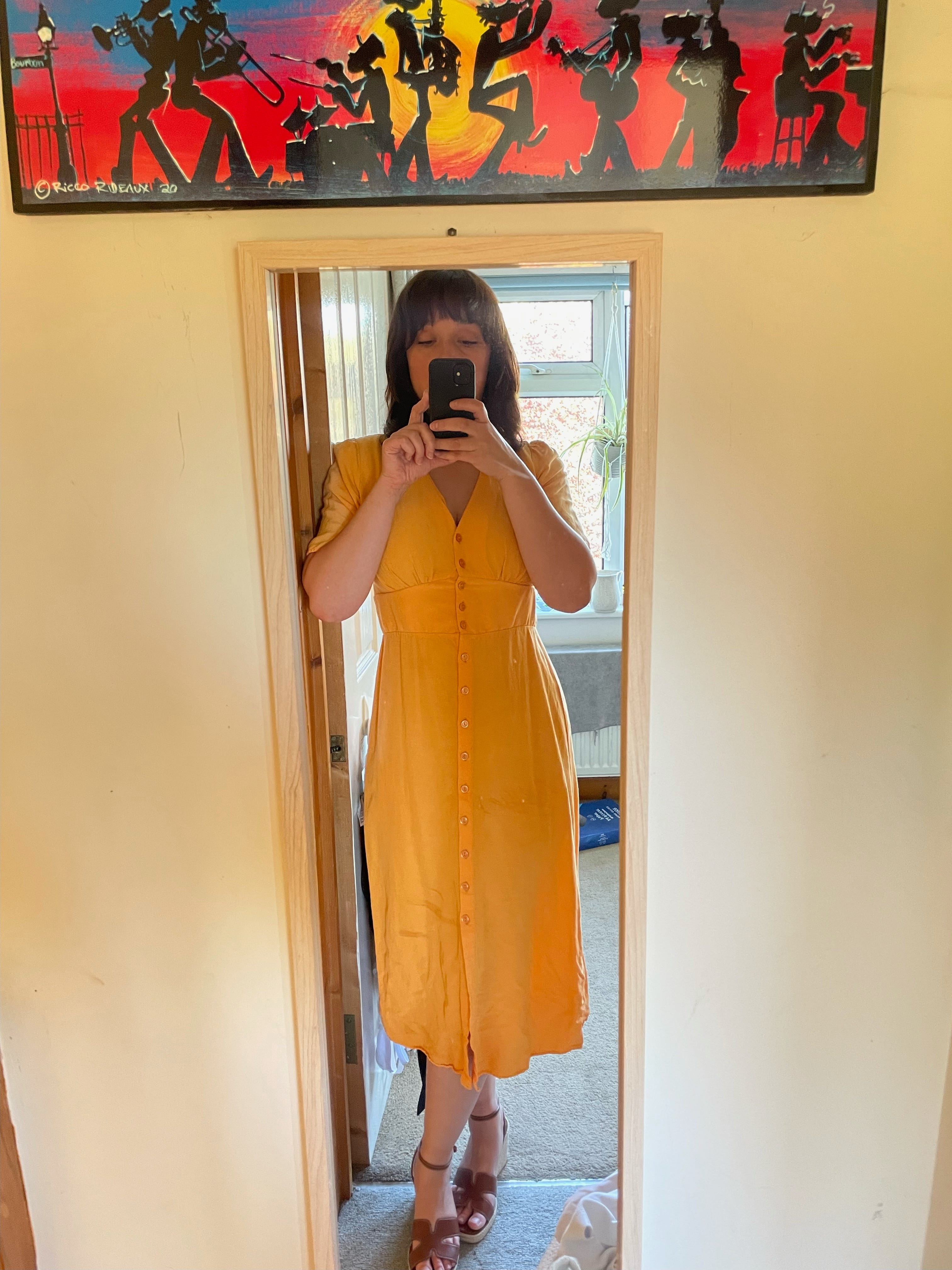
[And so you get the full experience, here is what I wore to the event! Thank you for your support along this journey]
I’m sure this is the first of many talks. Great job.
Absolutely fantastic speech ❤️